- Zero Trust
- Security Architecture
- ·
-
Jan 08, 2026
The Quiet Shift: From Enforcing Rules to Enforcing Baselines
The era of the static security rule is ending. As modern organizations roll out new infrastructure on edge platforms, a pattern is emerging that deserves more attention: legacy security components are getting smarter.

Nikola Novoselec
Founder & Zero Trust Architect
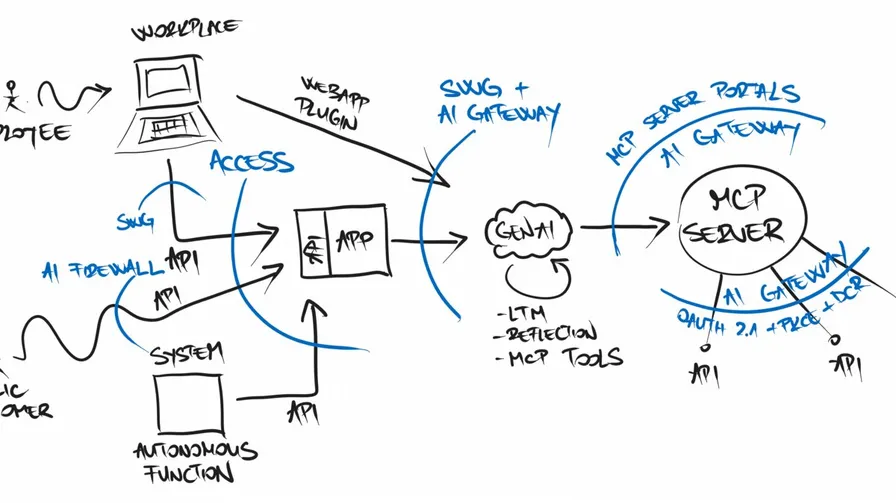
The era of the static security rule is ending.
As modern organizations roll out new infrastructure on edge platforms like Cloudflare, a pattern is emerging that deserves more attention: legacy security components are getting smarter. They’re transitioning from enforcing rules to enforcing baselines.
This is more than a product update. It’s a philosophical shift in how we think about defense.
The Problem with Rules
Static rules made sense when attacks were predictable. Block this IP range. Rate-limit at 100 requests per second. Reject requests without the right headers.
But when your adversary is an LLM-powered script that can rotate fingerprints, mimic human behavior, and probe for business logic flaws - rules become a losing game. You’re writing signatures for yesterday’s attacks while tomorrow’s are being generated in real-time.
Rules encode what we think attacks will look like. Baselines encode what our systems actually look like.
The Baseline Approach
Instead of “block X if Y condition,” the new logic is “learn what normal looks like, then flag deviations.”
Take DDoS mitigation. Instead of generic thresholds, the system now builds a 7-day rolling traffic profile for your specific application - tracking rates across dimensions like source country and user agent, using the 95th percentile to eliminate outliers. When traffic deviates from YOUR baseline, not some industry-average threshold, mitigation triggers. The system learns your normal, then defends it.
Bot detection has moved beyond fingerprint databases. The anomaly detection engine builds a baseline specific to your domain. It doesn’t care what a user agent claims to be - it cares whether the request pattern fits what your traffic actually looks like.
API security is perhaps the clearest example of the shift. Traditional controls ask “is this a valid request?” The baseline approach asks “is this a valid sequence of requests?” The system builds probabilistic models of how legitimate users navigate your API. When someone jumps directly to a funds transfer endpoint without the normal preceding calls to check balances and accounts, that deviation gets flagged. It’s detecting business logic abuse that no static rule could anticipate.
Even access control is evolving. Instead of binary allow/deny based on role, behavioral baselines adjust trust levels dynamically. Unusual login location? Atypical access pattern? The system responds to deviations, not just violations.
Why This Matters
The shift from rules to baselines is really a shift from reactive to predictive security. Rules require you to anticipate attacks. Baselines require you only to understand your own normal - and then let the system detect when something stops being normal.
This isn’t without tradeoffs. Baselines need learning time. They can be poisoned by slow, patient attackers. Explainability becomes harder when “the model said so.” These are real concerns my team is still working through.
But as AI-powered attacks become more sophisticated, I believe this is the only sustainable defense model. You can’t write rules fast enough to match an adversary that generates novel attack patterns on demand. You can build systems that know what normal looks like and respond to deviations.
The defenders are finally getting the same advantage the attackers have had: adaptability.
Further Reading
For those who want to dig deeper into the technical implementation:
Bereit, Ihre Sicherheitslage zu transformieren?
Ob Sie ein Zero Trust Maturity Assessment, ein Security Architecture Review oder Beratung zur Integration von KI in Ihre Security Operations benötigen - lassen Sie uns Ihre Situation besprechen. Kein Verkaufsprozess. Keine Vorgespräche mit Junioren. Ein direktes Gespräch über Ihre Herausforderungen.
Jahre Erfahrung
Von Assessment über Architektur bis zur Implementierung
Branchen
Logistik, Transport, Finanzwesen, Öffentlicher Sektor
Herstellerunabhängigkeit
Keine Partnerschaften. Keine Vermittlungsgebühren. Nur Ihre Interessen.